Two nominal outputs, one clear specification
0.07cc equals 0.07ml or 70 microlitres; 0.13cc equals 0.13ml or 130 microlitres. These figures describe nominal volume per complete actuation, not bottle capacity or how long a spray lasts. Specify which option you need when asking for a sample or quotation.
Longer spray emission, rather than a delayed start
In this product description, long-spray or extended-spray means that mist emission continues for longer. It does not mean waiting for the spray to start after pressing. The supplier wording DELAYED should not be interpreted as a stock or shipping delay.
No measured spray duration, droplet-size distribution, spray angle or output tolerance is specified here. Compare the actual sample under the intended use conditions rather than inferring those measurements from a photograph.
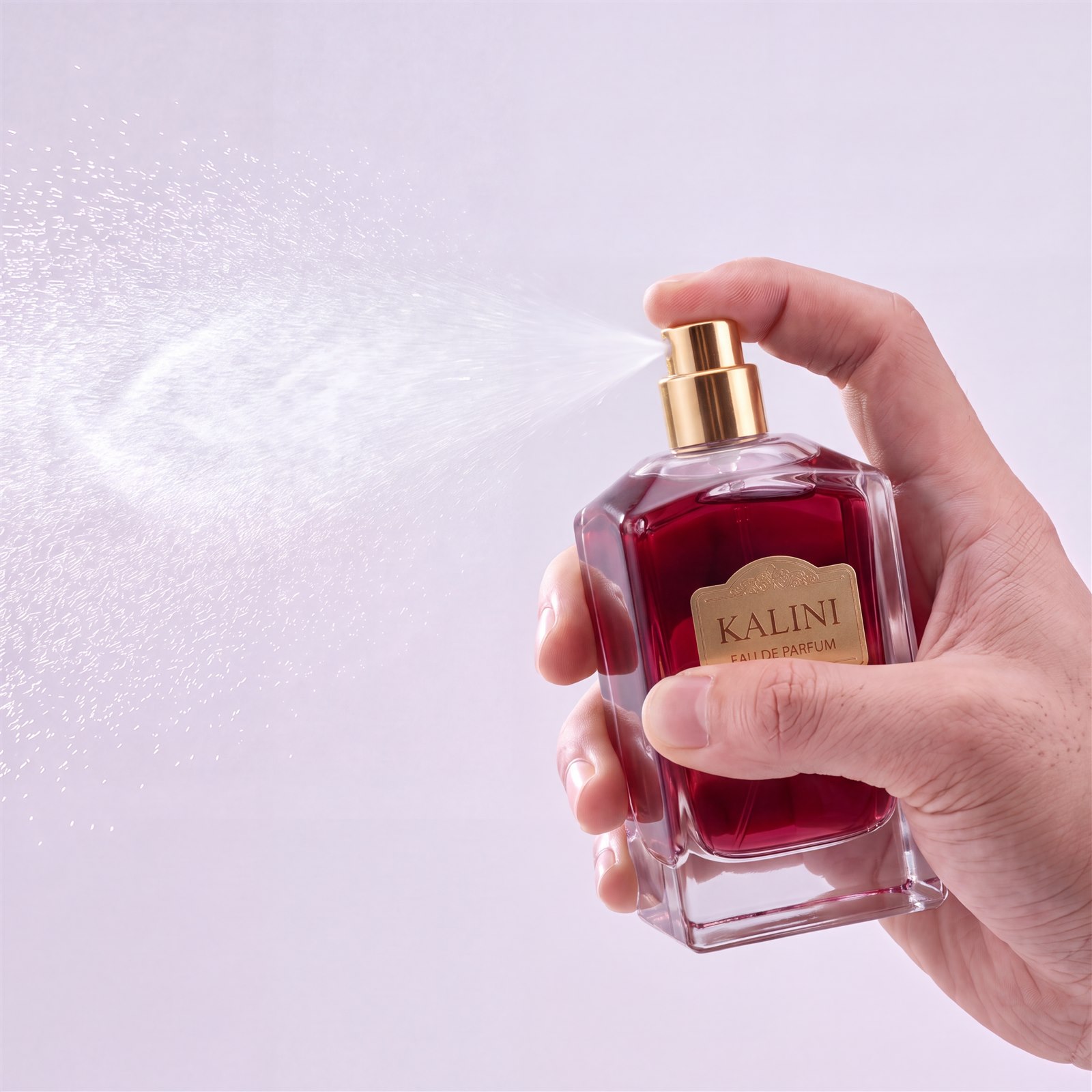
See the supplied spray demonstration
The photograph supplied by the owner shows the visible mist plume from a gold-tone sprayer on a KALINI-labelled demonstration bottle. The complete image and its original branding are retained. It illustrates spray appearance, not a laboratory measurement or a claim that OULU supplies the pictured filled fragrance.
The photograph does not distinguish the 70μL and 130μL variants. Request a clearly identified sample of each required output for a direct comparison.
Confirm the complete 15FEA bottle assembly
Review the exact bottle-neck specification, pump, collar, cap clearance and dip tube together. A shared 15FEA label alone does not establish compatibility with every bottle or cap. See the neck and sprayer matching guide for the assembly checks.
The 15FEA component directory shows photographed finish and collar directions. The two output options described here should not be assumed to apply to every pictured finish or component reference. Confirm the selected variant before ordering.
Request an output-specific sample and quotation
Send the bottle reference or neck drawing, required 0.07cc or 0.13cc output, finish, cap and collar needs, estimated quantity, destination and sample requirements. Include the formulation information relevant to component testing.
Use the sample approval guide to identify the exact components and the decisions the sample must close. Availability, MOQ, price and lead time are confirmed for that specific project.