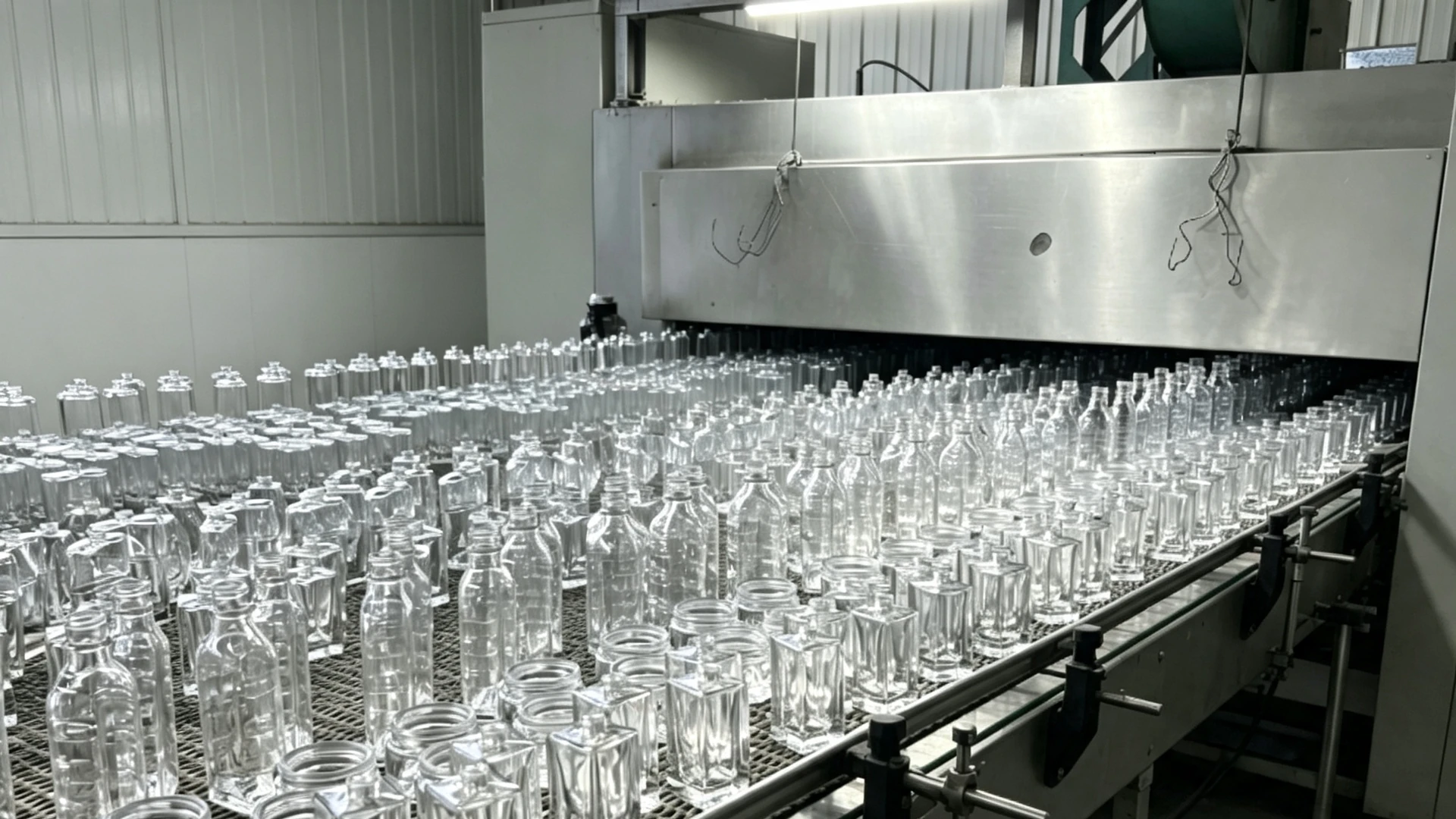
What the annealing-lehr image actually shows
The workshop image shows multiple clear glass bottle shapes moving out of the annealing lehr after controlled cooling. The view matters because it documents physical bottles in a production environment rather than a rendered catalog scene. It also shows why buyers should keep the discussion tied to an exact bottle reference: several shapes can be present in the same production setting, but they do not share one universal dimension, component set or commercial route.
The image is not a promise of production volume, timing or availability for every visible bottle. Those details remain subject to the selected OULU SKU, required quantity, component scope, decoration and current quotation review. Buyers can use the OULU perfume bottle catalog to identify an exact reference before requesting project-specific confirmation.
Why downstream inspection needs a written project basis
A clear bottle leaving the annealing stage is not yet a complete perfume package. The next questions depend on what the approved project requires: bottle appearance, shown dimensions, pump and collar direction, cap fit, decoration placement and the protective presentation of the finished set. A useful inspection discussion therefore begins with a written specification and an agreed sample or other defined approval reference.
OULU's quality-requirements page organizes that conversation around the complete pack rather than an unsupported universal checklist. If a brand has market-specific documentation, internal tolerances or defined appearance criteria, those requirements should be stated in the RFQ so the appropriate review route can be discussed.
Real inspection and protective-packing activity
The inspection footage shows finished fragrance packaging components being handled, visually reviewed and placed into protective packaging. It is useful operational evidence, but it does not imply that one short video covers every check for every product. The applicable inspection criteria still belong to the exact bottle, components, decoration and agreed project scope.
For buyers, the practical lesson is to define the assembled configuration early. A bottle may look suitable on its own while the selected pump, cap, decoration or insert creates a different approval question. Reviewing those elements as one system makes the final quality discussion clearer and reduces ambiguity between visually similar SKUs.
Connect inspection to decoration and the retail pack
After the bottle direction is defined, brand-facing processes such as color coating, silk-screen printing and hot stamping introduce their own approval points. Artwork position, color direction and surface coverage should be reviewed against the exact bottle and applicable sample instead of being inferred from another product image. Use the decoration guide to separate the intended appearance from the final approved output.
The retail box and insert also depend on the sufficiently defined assembled bottle. Width, depth, bottle-body height and overall height create only the initial dimensional reference; final protective packaging should follow the confirmed bottle and component configuration. OULU can coordinate the box and insert discussion once that reference is clear.
What buyers should send for a quality-focused review
Send the exact OULU SKU or product URL, required quantity, destination, component set, decoration direction, box needs and target timing. Add any appearance, fit, documentation or internal quality requirements already defined by your team. Separate confirmed requirements from preferences so the supplier review does not treat an early idea as an approved specification.
The perfume packaging RFQ checklist provides a practical structure for that message. OULU can then review the applicable stock, sample, inspection and packaging route without assuming unconfirmed order terms, timing or other commercial conditions.