What is a perfume sample vial, and what sizes are available?
A perfume sample vial is a small-format container used to present a trial quantity of fragrance. There is no universal capacity or exterior size. OULU's published directions range from 1.5ml and 2ml compact sampling formats through 2.5ml and 3ml trial formats to larger 5ml and 10ml tester directions. These are sourcing options, not a universal statement about applications or days of use.
OULU can review six perfume sample-vial capacities from 1.5ml to 10ml. For every option, provide the intended fill volume and exact vial reference. Nominal capacity does not establish one standard diameter, height, neck, dip tube or spray output, so those details remain part of the product-specific confirmation.
| Capacity | Useful brief direction | Still confirm |
|---|---|---|
| 1.5ml | Compact sampling format | Exact vial and sprayer specification |
| 2ml | Photographed discovery-set starting point | Dimensions, neck and dip tube |
| 2.5ml | Additional trial-volume option | Exact reference and availability |
| 3ml | Larger sample format | Vial footprint and component route |
| 5ml | Tester-bottle direction | Closure, decoration and outer pack |
| 10ml | Extended trial format | Complete assembled dimensions and pack |
Separate vial capacity from the complete assembled specification
A buyer may request a 2ml vial, but the insert designer needs more than the fill volume. The complete brief should identify the vial body, neck or pump interface, sprayer, actuator, cap if applicable, dip-tube direction and assembled dimensions. That information determines whether a photographed layout can be adapted or whether a different cavity and box footprint must be reviewed.
Use the sprayer and collar references to communicate a component direction, then ask for fit confirmation against the selected vial. A matching color or similar appearance does not prove compatibility. Final fit, spray behavior, dip-tube length, finish and availability belong to the exact approved configuration.
Define the number of fragrances before choosing the box
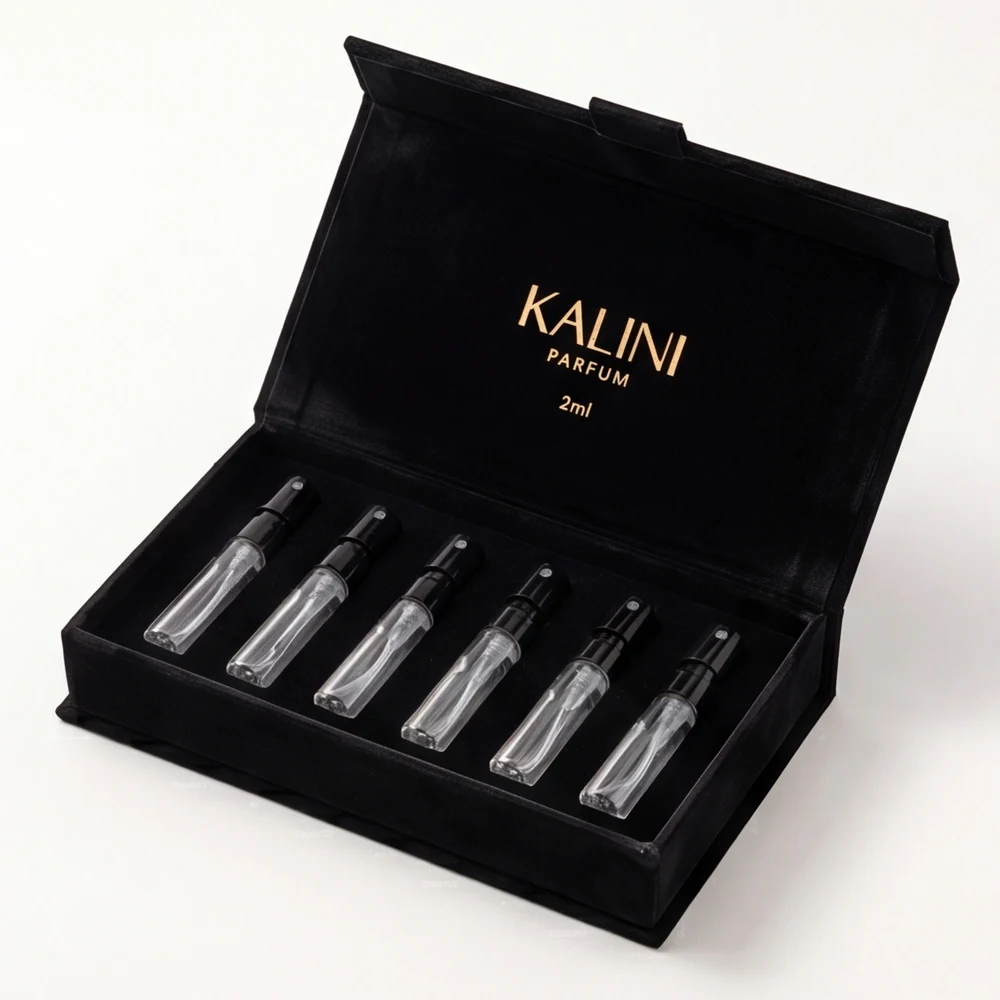
The supplied project photographs document one-, two-, three-, four-, five- and six-vial presentation directions. Set count changes the box proportions, insert balance, opening experience and available artwork area. A single-vial presentation can focus attention on one launch, while a multi-vial discovery set needs consistent spacing, retention and access across the complete assortment.
State the exact number of vial positions and whether every position uses the same vial. If the set combines different capacities or formats, list them separately. The photographed arrangements are visual and structural references; they do not confirm a standard cavity size, insert material or commercial term for another vial.
Compare hinged and drawer presentation structures
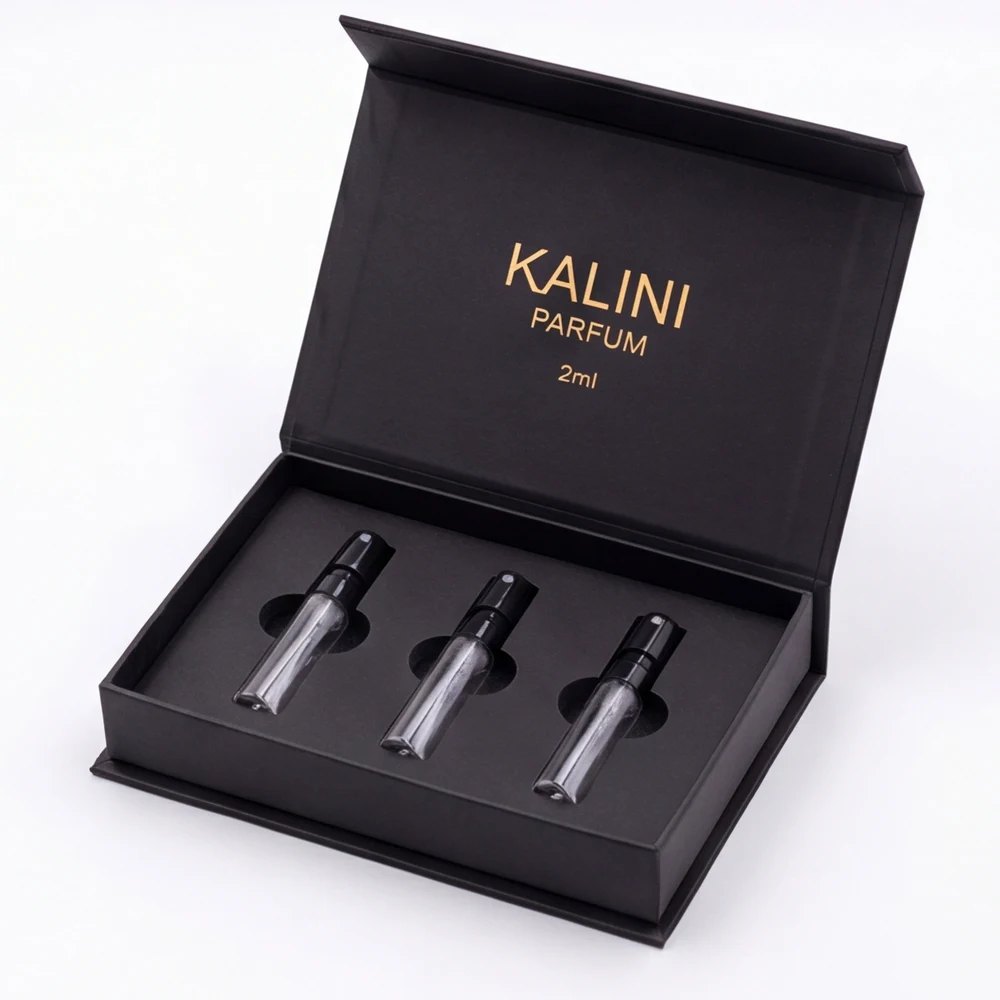
A hinged box reveals the vial arrangement in one opening movement and can provide an inside-lid branding surface. A drawer box separates the outer sleeve from the tray and makes pull direction, finger clearance and product exposure part of the experience. Neither structure is automatically better; the decision depends on vial count, presentation, access, protection and packing requirements.
Review additional photographed structures in the perfume box types and inserts guide. Confirm the opening route, outer proportions, insert retention and artwork surfaces after the vial and sprayer assembly is sufficiently defined.
Build the insert around protection, retention and access
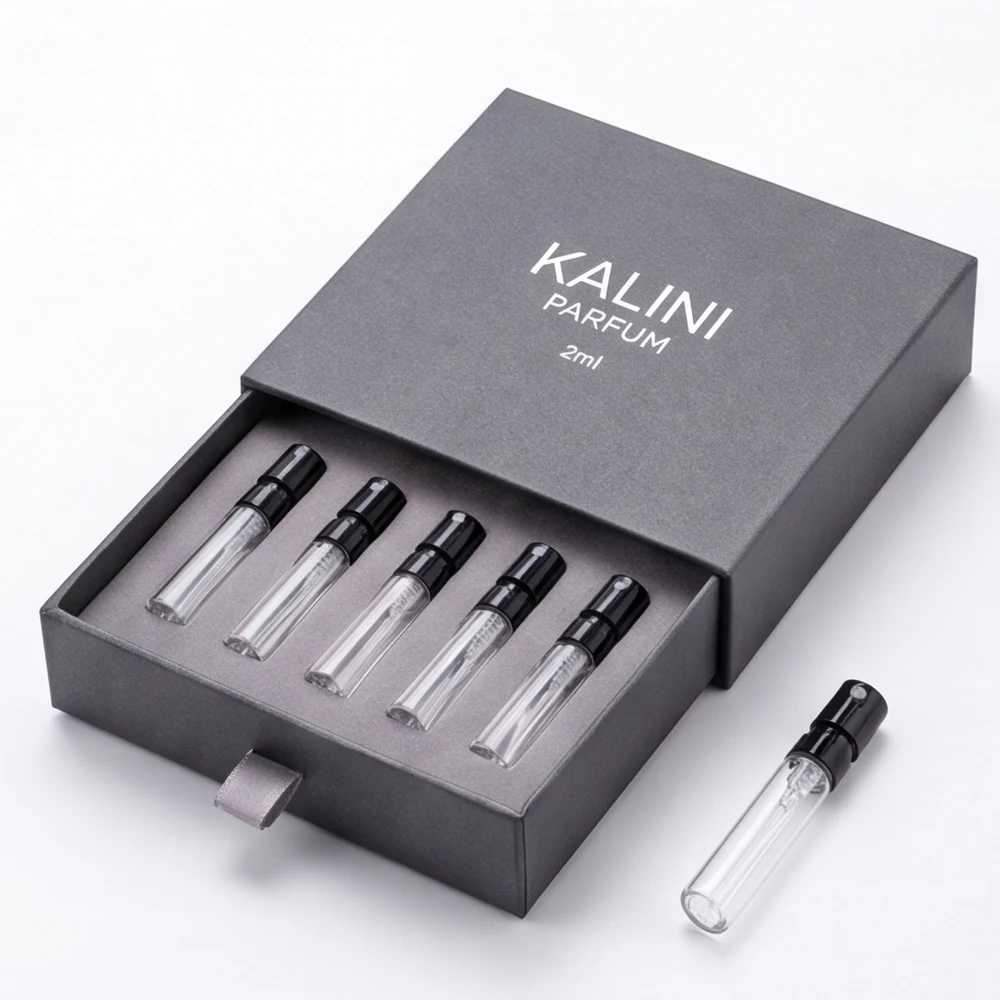
The insert must hold each vial in the intended orientation while allowing the buyer to remove it without damaging the label, sprayer or surrounding presentation surface. Define cavity spacing, finger access and the required amount of exposed vial. If transport protection is a concern, include the applicable handling and packing expectations in the brief.
Do not finalize an insert from a capacity label or screen image alone. Supply confirmed product dimensions and review the fitted result against the selected set configuration. Insert material, cavity construction and protection performance remain subject to the agreed project specification and approval route.
Treat decoration and box artwork as connected approvals
Sample vials may need a label, printed mark or another decoration route, while the box carries the broader assortment story and product information. Provide editable artwork when available, identify the required logo position and separate production requirements from visual inspiration. The visible private-label artwork in supplied photographs is project reference material rather than an OULU retail brand.
Coordinate the vial artwork, insert color, box surface and logo process so the set reads as one presentation. Final color, print, metallic detail and placement should follow the agreed sample or approval criteria rather than a display image alone.
Prepare one quote-ready discovery-set brief
Send the target capacity, exact vial reference, estimated quantity for each configuration, sprayer direction, number of fragrances, box structure, insert and protection needs, artwork status, destination and target timing. If several capacities are under review, separate the quantity and set count for each option.
Use the packaging RFQ checklist to distinguish confirmed requirements from preferences. Live availability, component fit, MOQ, sampling route, price and schedule are confirmed for the selected vial and approved packaging scope rather than inferred from this guide.